When to Climb Acatenango: A Season by Season Guide
It is the first question almost everyone asks us, and it deserves a real answer rather than a single month circled on a calendar. The truth is that there is no bad time to climb Acatenango. There are only different versions of the mountain, each with its own character, and the right one for you depends on what you most want from the night you spend up there.
What you are really choosing between is a set of trade-offs: the clarity of the sky and your odds of watching Fuego erupt against the dark, the temperature you will sleep in, the colour of the landscape on the way up, and how many other footsteps share the trail with yours. Understand those four things and the question answers itself.
The two seasons that shape everything
Guatemala’s highlands move to the rhythm of two seasons rather than four. The dry season runs roughly from November to April, and the green season what the rest of the world might call the rainy season fills the months from May to October. Almost everything worth knowing about timing your climb flows from this single distinction.
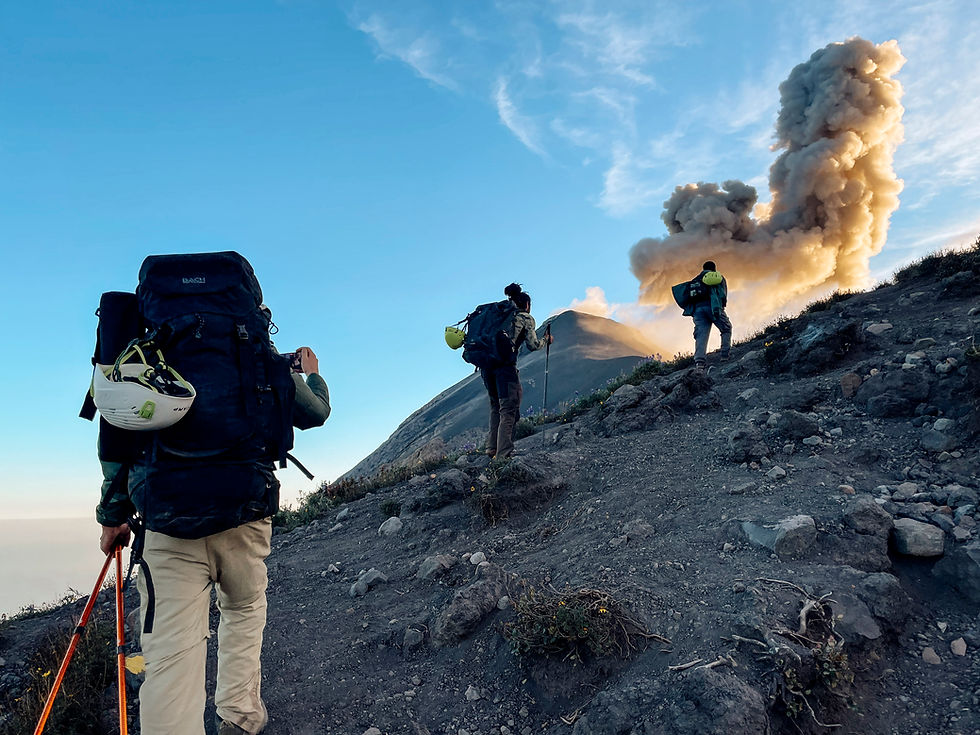
Acatenango rises to nearly four thousand metres, and its slopes sit directly across a saddle from Volcán de Fuego, one of the most active volcanoes in Central America. Fuego rarely stays quiet for long. On a clear night you may watch it exhale glowing rock against the dark, sometimes every twenty or thirty minutes. But you can only witness what the weather allows you to see, and that is where the seasons begin to matter.
Dry season: November to April
For most travellers, this is the postcard window. The skies are at their most reliable, the cloud lifts off the summits more readily, and your chances of a clear, uninterrupted view of Fuego by day and especially by night are at their highest. If your single reason for making the climb is to stand above the clouds and watch an active volcano perform, these are the months that give you the best odds.
That clarity comes with a companion: cold. At altitude, dry-season nights are genuinely cold, and from December through February the temperature at the summit can fall below freezing in the small hours before dawn. None of this is a deterrent it is simply something to come prepared for, and something we plan around carefully so that the cold becomes part of the memory rather than the whole of it.
The dry season is also the busy season. The clearest skies draw the largest numbers, and certain dates concentrate the crowds dramatically. We will come back to those.
Green season: May to October
The green season is the mountain’s best-kept secret, and the choice of travellers who value atmosphere over certainty. The hillsides turn a deep, living green, the cloud forest feels alive, and the trails are markedly quieter. There is a particular kind of magic in having the slopes more to yourself.
The weather asks a little more patience of you. Rain in these months tends to follow a pattern: mornings often open clear and bright, cloud builds through the afternoon, and showers arrive later in the day. Plan the ascent well and you can climb through a clear morning, settle into camp, and still have a strong chance of the cloud parting at night to reveal Fuego — perhaps not every night, but often, and all the more rewarding for it. Nights are cold but generally less brutal than the dry-season depths.
For those who want the experience without the procession of other groups, and who can hold their plans with a little flexibility, the green season is a quietly wonderful time to go.
The thing no season changes: the cold
Whichever months you choose, come ready for cold at the top. Acatenango makes its own climate, and the difference between Antigua’s mild afternoons and the summit’s pre dawn chill is dramatic. Warm layers, a proper sleeping setup, and good preparation are non-negotiable year-round. This is part of why we keep our groups small and our equipment considered at altitude, comfort is not a luxury but the thing that lets you actually be present for the view.

A month-by-month read
• November The shoulder into dry season. Skies clearing, landscape still green, crowds still modest. One of the finest windows of the year.
• December to February Peak clarity and peak cold. Exceptional visibility, the highest chance of a glowing Fuego against the dark, and the coldest nights. Christmas and New Year bring crowds.
• March to April Warm, clear, and reliably dry, with Semana Santa (Easter week) as the single busiest moment in the region.
• May to June The turn into green season. Landscapes lush, trails quieter, mornings often clear with afternoon cloud.
• July to September The heart of the green season. Greenest scenery, fewest people, and the most weather to work around. For the right traveller, deeply rewarding.
• October The transition back toward dry. Green still, gradually clearing, and pleasantly uncrowded before the season turns.
A note on the busiest dates
If you have any choice in the matter, plan around the region’s peak moments. Semana Santa — the week leading to Easter transforms Antigua and fills the mountain. Christmas, New Year, and the northern-hemisphere summer holidays also draw significant numbers. None of these make the climb any less spectacular, but they do change its texture. If solitude matters to you, the weeks on either side of these dates offer the same mountain with a fraction of the company on the volcano.
How we think about timing
We have walked these slopes in every month of the year, and our honest view is this: choose dry season for the surest skies and the cleanest odds of watching Fuego erupt, and choose green season for a greener, quieter, more intimate mountain. Either way, the experience lives or dies on preparation, pacing, and the people you climb with which is precisely where we focus. Small groups, an unhurried ascent built around acclimatisation, considered equipment for the cold, and guides whose wellbeing we look after as carefully as our guests’ comfort.
Tell us what you are hoping for from the night, and we will tell you honestly when to come and make the climb feel less like an endurance test and more like the rare privilege it is.
Ready to plan your ascent? Reach us at info@noma-travel.com.
Comments